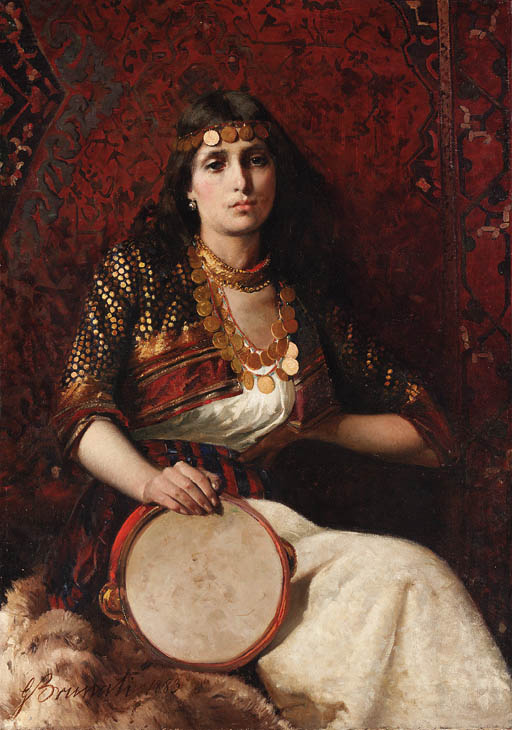
Traditional Roma dress is a language of identity. Colour, cut, embroidery and jewellery signal region, family and occasion, and differ markedly from Iberia to the Balkans and Central Europe.
Women’s dress in many communities features long, full skirts, headscarves and rich ornament; gold worn as jewellery has long doubled as portable family wealth. On stage, costume becomes part of performance — from flamenco’s bata de cola to the embroidered finery of folk ensembles.
Sources & further reading: RomArchive (Visual Art), Europeana and Wikimedia Commons.
Gallery
20 openly-licensed images
Images via Wikimedia Commons — openly licensed (CC / public domain). Click any image to view full-size; source & licence shown below.
Regional styles
Distinct dress traditions from Iberia to the Balkans.
Embroidery
Hand-worked patterns carrying family and regional meaning.
Adornment
Jewellery and gold as heritage, pride and portable wealth.
On stage
How costume shapes performance and presence.
Be part of the network
Join as an artist, post a talent request, or explore the community.