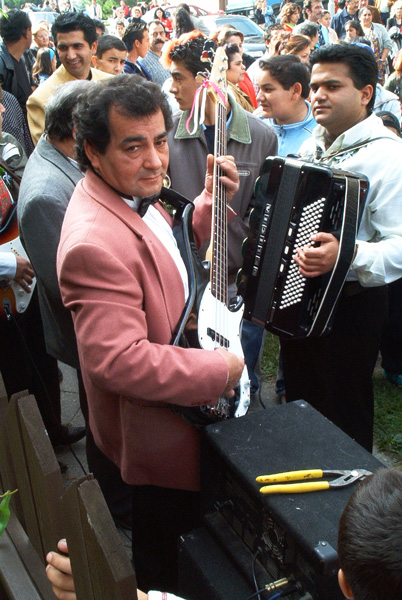
Roma music is not a single genre but a living thread running through dozens of traditions. Wherever Roma communities settled they absorbed local forms and gave them back transformed — more virtuosic, more emotionally direct, and unmistakably their own. The result is a family of styles linked less by a common scale than by a shared spirit of improvisation and feeling.
In Andalusia that spirit became flamenco, where Gitano families shaped cante (song), toque (guitar) and baile (dance) into one of Europe’s most intense art forms. In France and Belgium the guitarist Django Reinhardt fused swing with Romani phrasing to create gypsy jazz. Across the Balkans, Roma brass bands turned weddings and festivals into explosions of sound, while in Hungary and Romania the violin and the cimbalom (hammered dulcimer) defined the café-orchestra and folk traditions for which the region became famous.
What unites these worlds is the musician as a professional carrier of culture — often the family trade, passed from parent to child, and for centuries the soundtrack of the wider society’s own celebrations.
Sources & further reading: RomArchive (Music and Flamenco sections), the Council of Europe Roma history & culture factsheets, and Wikipedia.
Gallery
33 openly-licensed images
Images via Wikimedia Commons — openly licensed (CC / public domain). Click any image to view full-size; source & licence shown below.
Flamenco
Born among the Gitanos of Andalusia — cante, toque and baile woven into one deeply personal art of duende.
Manouche / Gypsy jazz
The swinging, virtuosic guitar style created by Django Reinhardt and carried on by the Sinti and Manouche.
Balkan brass
High-energy fanfare bands — the defining sound of celebrations from Serbia and North Macedonia to Romania.
Cimbalom & strings
The shimmering hammered dulcimer and violin at the heart of Hungarian and Romanian Roma ensembles.
Be part of the network
Join as an artist, post a talent request, or explore the community.